


Some error occured while loading the Quick View. Please close the Quick View and try reloading the page.
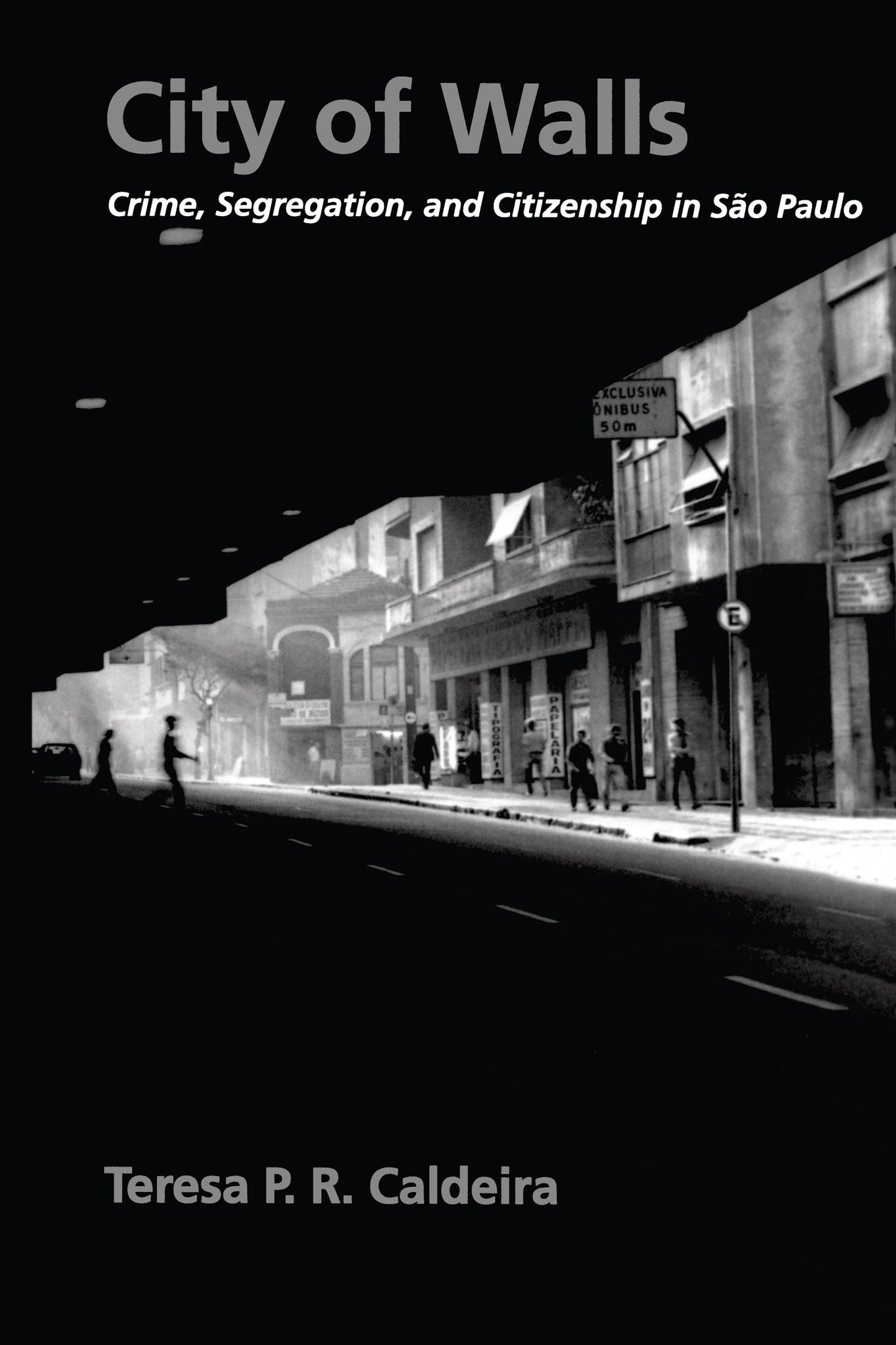
Teresa Caldeira's pioneering study of fear, crime, and segregation in São Paulo poses essential questions about citizenship and urban change in contemporary democratic societies. Focusing on São Paulo, and using comparative data on Los Angeles, she identifies new patterns of segregation developing in these cities and suggests that these patterns are appearing in many metropolises.

Price: $34.95
Pages: 504
Publisher: University of California Press
Imprint: University of California Press
Publication Date:
01 April 2001
Trim Size: 9.00 X 6.00 in
ISBN: 9780520221437
Format: Paperback
BISACs:
Teresa P. R. Caldeira is Associate Professor in the Department of Anthropology at the University of California, Irvine. She has been a professor of anthropology at the State University of Campinas (Unicamp) and a senior researcher at the Brazilian Center of Analysis and Planning (Cebrap) in São Paulo.
List of Maps, Illustrations, and Tables
Acknowledgments
Abbreviations
Introduction: Anthropology with an Accent
PART ONE: The Talk of Crime
1. Talking of Crime and Ordering the World
Crime as a Disorganizing Experience and an Organizing Symbol
Violence and Signification
From Progress to Economic Crisis, from Authoritarianism to Democracy
2. Crisis, Criminals, and the Spread of Evil
Limits to Modernization
Going Down Socially and Despising the Poor
The Experiences of Violence
Dilemmas of Classification and Discrimination
Evil and Authority
PART TWO: Violent Crime and the Failure of the Rule of Law
3. The Increase in Violent Crime
Tailoring the Statistics
Crime Trends, 1973-1996
Looking for Explanations
4. The Police: A Long History of Abuses
A Critique of the Incomplete Modernity Model
Organization of the Police Forces
A Tradition of Transgressions
5. Police Violence under Democracy
Escalating Police Violence
Promoting a “Tough” Police
The Massacre at the Casa de Detenção
The Police from the Citizens’ Point of View
Security as a Private Matter
The Cycle of Violence
PART THREE: Urban Segregation, Fortified Enclaves, and Public Space
6. São Paulo: Three Patterns of Spatial Segregation
The Concentrated City of Early Industrialization
Center-Periphery: The Dispersed City
Proximity and Walls in the 198s and 199s
7. Fortified Enclaves: Building Up Walls and Creating a New Private Order
Private Worlds for the Elite
From Cortiços to Luxury Enclaves
A Total Way of Life: Advertising Residential Enclaves for the Rich
Keeping Order inside the Walls
Resisting the Enclaves
An Aesthetic of Security
8. The Implosion of Modern Public Life
The Modern Ideal of Public Space and City Life
Garden City and Modernism: The Lineage of the Fortified Enclave
Street Life: Incivility and Aggression
Experiencing the Public
The Neo-international Style: São Paulo and Los Angeles
Contradictory Public Space
PART FOUR: Violence, Civil Rights, and the Body
9. Violence, the Unbounded Body, and the Disregard for Rights in Brazilian Democracy
Human Rights as “Privileges for Bandits”
Debating Capital Punishment
Punishment as Private and Painful Vengeance
Body and Rights
Appendix
Notes
References
Index
Acknowledgments
Abbreviations
Introduction: Anthropology with an Accent
PART ONE: The Talk of Crime
1. Talking of Crime and Ordering the World
Crime as a Disorganizing Experience and an Organizing Symbol
Violence and Signification
From Progress to Economic Crisis, from Authoritarianism to Democracy
2. Crisis, Criminals, and the Spread of Evil
Limits to Modernization
Going Down Socially and Despising the Poor
The Experiences of Violence
Dilemmas of Classification and Discrimination
Evil and Authority
PART TWO: Violent Crime and the Failure of the Rule of Law
3. The Increase in Violent Crime
Tailoring the Statistics
Crime Trends, 1973-1996
Looking for Explanations
4. The Police: A Long History of Abuses
A Critique of the Incomplete Modernity Model
Organization of the Police Forces
A Tradition of Transgressions
5. Police Violence under Democracy
Escalating Police Violence
Promoting a “Tough” Police
The Massacre at the Casa de Detenção
The Police from the Citizens’ Point of View
Security as a Private Matter
The Cycle of Violence
PART THREE: Urban Segregation, Fortified Enclaves, and Public Space
6. São Paulo: Three Patterns of Spatial Segregation
The Concentrated City of Early Industrialization
Center-Periphery: The Dispersed City
Proximity and Walls in the 198s and 199s
7. Fortified Enclaves: Building Up Walls and Creating a New Private Order
Private Worlds for the Elite
From Cortiços to Luxury Enclaves
A Total Way of Life: Advertising Residential Enclaves for the Rich
Keeping Order inside the Walls
Resisting the Enclaves
An Aesthetic of Security
8. The Implosion of Modern Public Life
The Modern Ideal of Public Space and City Life
Garden City and Modernism: The Lineage of the Fortified Enclave
Street Life: Incivility and Aggression
Experiencing the Public
The Neo-international Style: São Paulo and Los Angeles
Contradictory Public Space
PART FOUR: Violence, Civil Rights, and the Body
9. Violence, the Unbounded Body, and the Disregard for Rights in Brazilian Democracy
Human Rights as “Privileges for Bandits”
Debating Capital Punishment
Punishment as Private and Painful Vengeance
Body and Rights
Appendix
Notes
References
Index